Enrique del Sol – Robotics, Mechatronics & Control Research
Portfolio, Robotics Research Blog, Meeting Point & Showcase of Ideas

One of the smallest robots in the world from HoneyBee robotics.

Robots for In-pipe inspection are a thriving research topic in the industry and the robotics community. There is a growing interest in developing new solution for inspecting pipes in nuclear reactor, fusion machines, particle accelerators, etc. Most of the COTS solutions can operate in large diameter pipes, from 100 mm onwards. However, there is a lack of solutions for small sized pipes and new research would be needed in this area.
Share this:

Tagged with: DN8, honeybee, inspection, ITER, magnetic pipes, micro robots, Pipe inspection robots
Posted in Inspection robots, News, Robotics
Posted in Inspection robots, News, Robotics
The use of videoscopes for In-Pipe inspection

The most common commercial solutions to inspect through holes, narrow gaps or pipes are the videoscopes. There are multiple types depending on the field of application or the underlying technology. Endoscope is a medical apparatus referred commonly to the inspection of the human body. Borescope is an optical device consisting of a rigid or flexible tube with an eyepiece on one end, an objective lens on the other linked together by a relay optical system in between. The optical system in some instances is surrounded by optical fibres used for illumination of the remote object. Videoscopes are an advanced type of borescope that houses a very small CCD chip embedded into the tip of the scope. The video image is relayed from the distal tip and focusable lens assembly back to the display via internal wiring.
Share this:

Tagged with: Eddy current, fiberscopes, Inspection tools, pipe inspection, SMA, small diameter pipes, ultrasound, videoscopes
Posted in Inspection robots, Robotics
Posted in Inspection robots, Robotics
Dynamic modelling of robots: parameters identification (II)
Hi! In this post I will explain the method for obtaining a set of equations to be able to identify the dynamic model of robot composed by several links even in presence of closed loops. In the previous post I detailed how to obtain an expression of the forces and torques acting on the last link as a linear function of the robot parameters. Now let us include the rest of the links.
We said that the spatial force acting on that robotic link is:

However, here the interest lays on identifying the inertial and mass parameters of the whole robotic structure and the effect of all links should be taken into account.
Read more ›Share this:

Tagged with: closed loop, Dynamic, modelling, parameter indetification, Robots, spanning tree
Posted in Robot Dynamics, Robotics
Posted in Robot Dynamics, Robotics
Force estimation with Luenberger-Sliding observers
Two lines are showed in the upper image of this video. In blue, the estimated total force and in red, the measured force. This video shows how the Luenberger-Sliding observer manages to estimate external forces during a compression task.
Sliding observers are a special application of the first developed sliding control. This type of control is a nonlinear control method that alters the dynamics of a nonlinear system by application of a discontinuous signal that forces the system to “slide” along a cross-section of the system’s normal behaviour. Read more ›
Share this:

Tagged with: Force Estimation, KRAFT, Luenberger, manipulators, observers, Robots, Sliding
Posted in Control for teleoperation, Force Estimation, Robotics
Posted in Control for teleoperation, Force Estimation, Robotics
Dynamic modelling of robots: parameters identification (I)
The identification of a robot is a complex process composed by multiple steps very well defined by the research community. In this post I will try to explain the main steps in order to obtain the dynamic model of most robots. They could be either a serial manipulator or a manipulator with closed loops. Also I will introduce a mathematical mechanism to transform the main equation of the robot dynamics (See previous post) into a linear expression with the parameters. In this post, only the dynamics of the last link will be obtained. Later on, I will include the whole robotic structure.

Share this:

Tagged with: CAD, closed links, Dynamic modelling, dynamics, identification, parameter, Robots
Posted in Robot Dynamics, Robotics
Posted in Robot Dynamics, Robotics
An amazing video on the development of fractal..
An amazing video on the development of fractal… – http://wp.me/p5ZlYn-9A
Share this:

AN AI MIND PASSES THE TURING TEST
Jill Watson, a robotic teaching assistant, passes the Turing test? – http://wp.me/p7fp8X-2j
Share this:




Master-Slave Manipulator A100 Telerob (Wälischmiller)


Upgraded X-carriage and extruder V1 (Complete layout)

Figure 7. Improved X-Carriage


Dexter Manipulator manufactured by Oxford Technologies Ltd.


Olympus videoscope.

HoneyBee pipe inspection robot

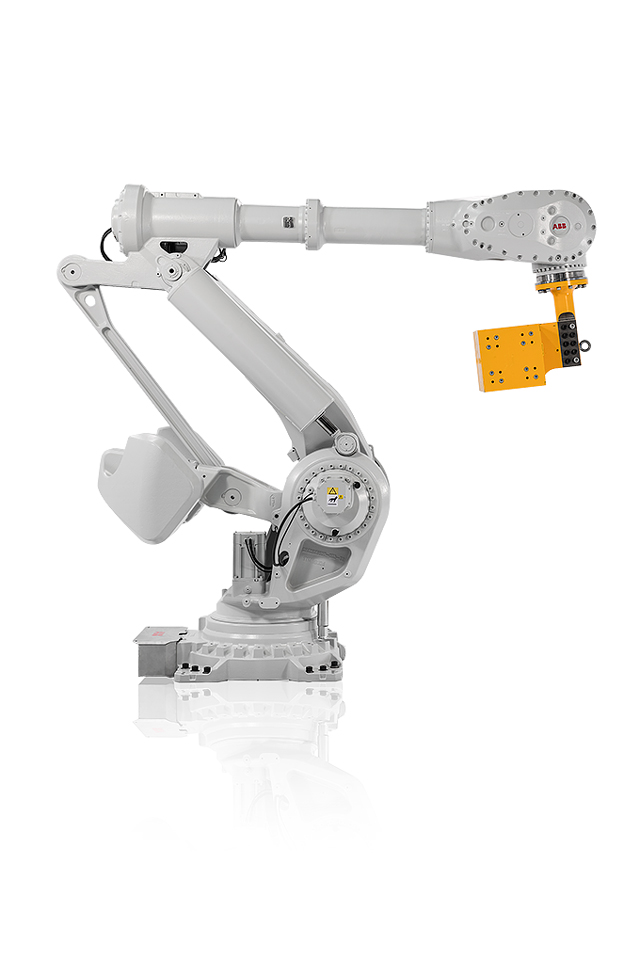
ABB robot with a closed loop.

Robotics & Mechatronics explanatory diagram including the involved areas such as: mechanical design, electronics, control systems and artificial intelligence.

HoneyBee pipe inspection robot

Kraft GRIPS hydraulic manipulator with force feedback

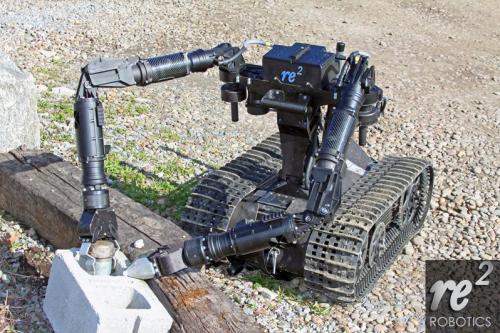
RE2 EDO Robot

Friction behaviour

ABB IRB 2400

Prosthetic Hand

ATI Gamma 6-axis force torque transducer


Spiral Bevel Gears

Cable Capstan Drives


Types of radiation

FlexiForce foil sensor.


Honeywell FSS1500NSB force sensor.


 Enrique del Sol - Robotics, Mechatronics & Control Research